
- Updated:
Client
Project Duration
Sector
Services Provided
Challenge
With a need for new construction and a vision of simple, clean, efficient vessels – but with no recent experience in designing or building ships – Seaspan faced a challenge.
Solution
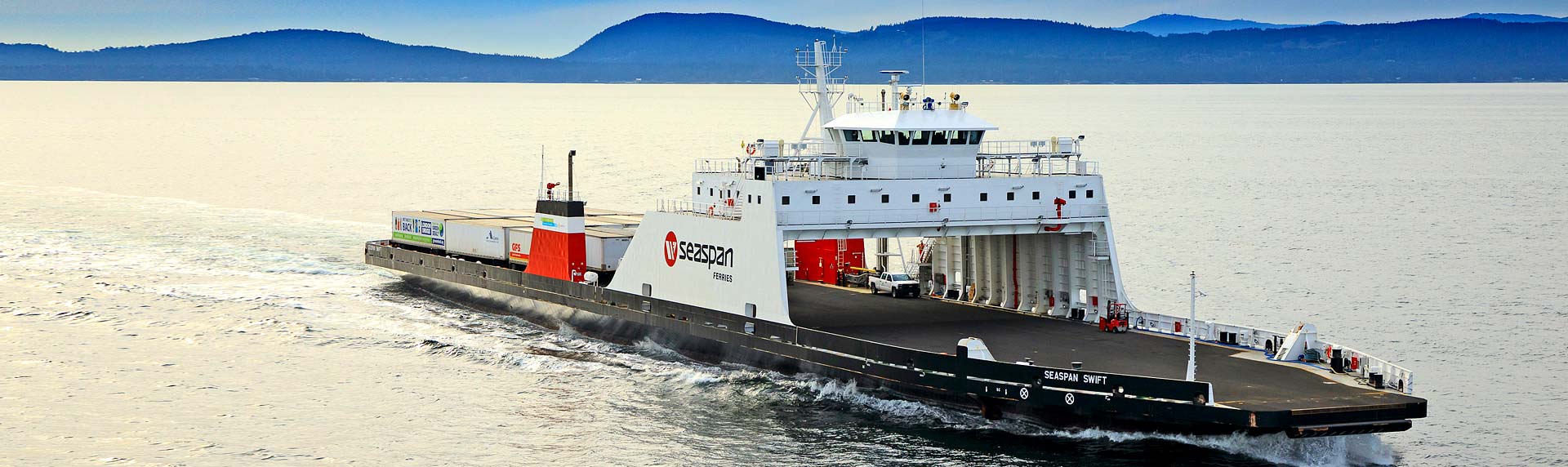
Vard Marine worked with Seaspan throughout each phase of the project from concept definition and design development to shipyard selection and construction. Our feasibility studies showed the potential savings of using liquified natural gas (LNG) in dual-fuel engines that permitted the use of diesel when required. Installing a battery bank for hybrid application further improved savings by allowing Seaspan to operate on a single engine, using the batteries as a backup and improving engine ramp-up performance. Given the novelty of the hybrid technology, the Classification Society required risk analyses. We coordinated with stakeholders to organize HAZID and HAZOP workshops, developed pre-HAZID and pre-HAZOP technical packages (terms of reference), and facilitated the workshops. The HAZID/ HAZOP workshops revealed the need for a safety case for bunkering on deck, as this procedure had never been performed before. We worked with stakeholders to define a solution and develop bunkering procedures.
Project gallery
Value
Vard Marine partnered with Seaspan to renew their fleet and acquire two of the most advanced and efficient ferries in North America. Using a mix of technologies Vard Marine’s solution will save Seaspan close to $500 million fleetwide versus a conventional design over the lifespan of the ships. The solution also reduces greenhouse gas emissions by more than 30%. Seaspan trailer ferries became the first vessels ever approved for on-deck LNG bunkering.